
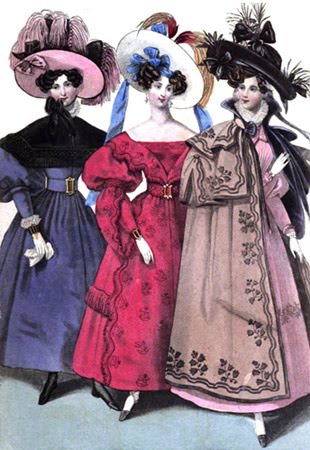
What better way to face cold winter winds than with the protection of a comfortable, enveloping pelisse. The pelisse was a long-enduring fashion in the first decades of the nineteenth century, resisting all efforts of the cloak, the spencer, and the cape to oust it from its place. The pelisse was more of a winter than a summer garment. It was made of velvet, silk, satin, and sarcenet, a material much in vogue for turbans and gowns. Very bright, startling colors were used for pelisses, such as scarlet, yellow, flame-colour, light blue, pink, and green. The pelisses were fastened with large glittering gilt and silver buttons. Light, delicate colors were worn in winter with a complete disregard of the sooty fogs which were common in London. A lady of fashion would be seen walking out in November in an azure-blue sarcenet pelisse elegantly trimmed with ermine, and a Leghorn straw bonnet with blue ribbon bows and a great tuft of white feathers. There were, however, sensible dark cloth pelisses bordered with wide fur, looking very rich and warm. These cloth pelisses, and many of the silk ones too, completely covered the dress. Read full story.
 Jane Austen Society of North America - New Jersey Region