
For Janeites, it’s a source of enduring sadness that Jane Austen completed only six novels in her too-short life. Imagine all the wonderful characters we might have encountered if she had lived another twenty or thirty years!
Tantalizingly, two unfinished Austen novels survive—both abandoned by their author at very different moments in her life, and for very different reasons. Those fragments, now known as The Watsons and Sanditon, will be the subject of our next JASNA-New Jersey meeting, which will take place over Zoom on November 15 at 2 pm (US Eastern).
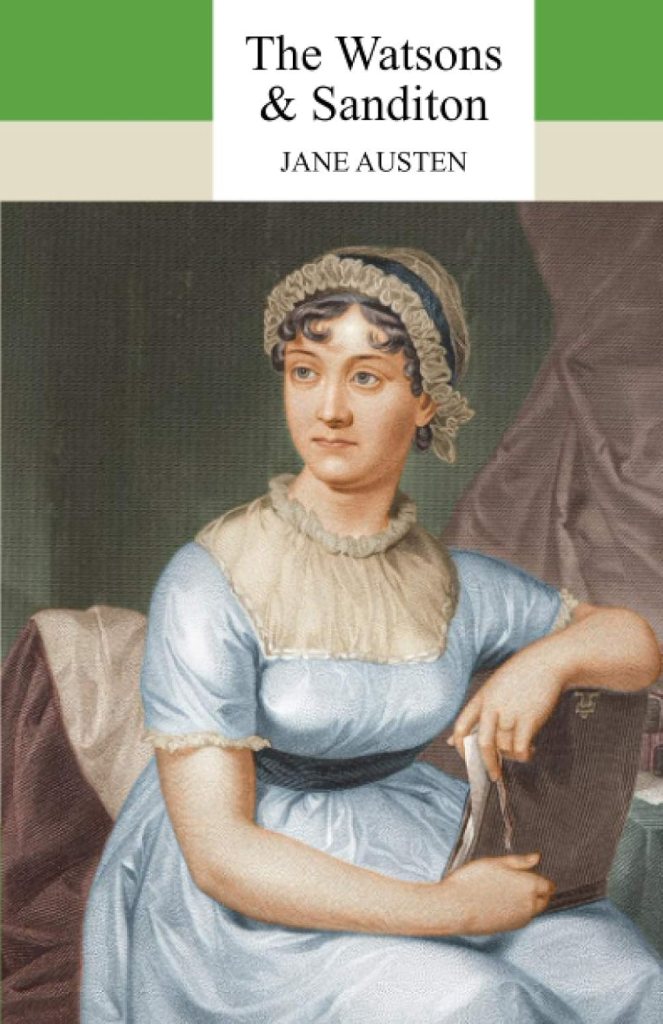
The earlier of the two fragments, The Watsons, was probably written in 1804, during Austen’s sojourn in Bath, when her writing output slowed to a trickle. Only 17,500 words (roughly 60 pages, in modern printed editions) survive.
Critics have speculated that Austen abandoned the project because the situation she planned to dramatize—the economic and romantic travails faced by a clergyman’s unmarried daughters after his death—felt too depressingly similar to her own difficult circumstances after the Rev. George Austen’s death in 1805. But many of the characters in The Watsons seem to foreshadow people we know from Austen’s mature novels; it seems likely that she plundered the fragment for usable material.
While The Watsons was written at a low point in Austen’s life, when her home life was unsettled and publication seemed a distant dream, the context in which Sanditon was created was far different. By January of 1817, when Austen began her new book, she had been happily settled in Chawton Cottage for nearly eight years, had published four well-regarded novels, and had earned a respectable sum of money with her pen.
In less than two months of work on Sanditon, she produced some 24,000 words (about 75 pages), a brisk pace that, if sustained, might have given her another completed manuscript by year’s end. But Austen’s health had been declining for months. By March, she seems to have become too ill to continue working, and on July 18, she died, age forty-one.
It’s both exhilarating and heartbreaking to read Jane Austen’s unfinished work, with its testimony to the energy of her imagination and the challenging life situations she faced. Please join us for a look at these fascinating pieces of work!
Attendance at the discussion is free, but you must register to receive a Zoom link. To do so, please email us at: jasnanewjersey AT gmail DOT com.
 Jane Austen Society of North America - New Jersey Region